1181 — 1226 · Assisi, Umbria
The Life of
Saint Francis
From the Last Supper to the tomb — Christ gives himself for us.
Sacred Paschal Triduum
Descend
Today's Word
“I am the vine, you are the branches. He who abides in Me, and I in him, bears much fruit.”
John 15:5
Today's Mass ReadingsDaily Reflection
“Praised be You, my Lord, through our Sister Mother Earth, who sustains and governs us, and who produces various fruit with coloured flowers and herbs.”
— Canticle of the Sun
Open Today's Devotions
Saint of the day, the liturgical calendar, and the novena in progress.
Approaching in the Sacred Year
1
Nov
All Saints (Solemnity)
2
Nov
All Souls (Commemoration)
11
Nov
St. Martin of Tours
21
Nov
Presentation of the Blessed Virgin Mary
He was not so much a man who loved God, as a man who was loved by God — and who, in being loved, became love itself.
G.K. Chesterton · St. Francis of Assisi, 1923
Daily Reflection
Sunday, November 1
Praised be You, my Lord, through our Sister Mother Earth, who sustains and governs us, and who produces various fruit with coloured flowers and herbs.
— Canticle of the Sun
The Daily Flame
A small fire you tend each day
Return tomorrow and light it again. The flame you keep here is yours alone — a quiet way to remember the path.
0
days tended
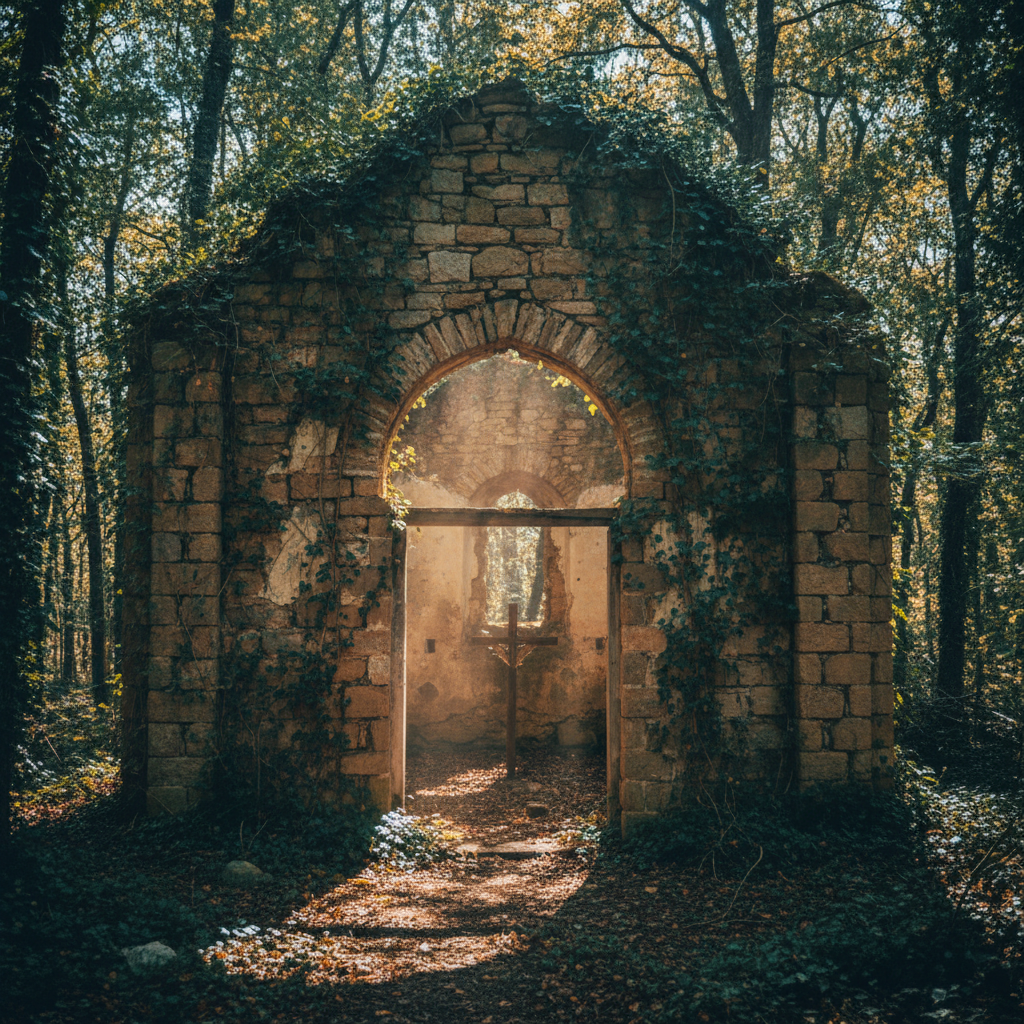
Assisi in the 12th century was a prosperous commune in constant tension with nearby Perugia — a tension that would shape Francis's path.
The Early Years
Son of the Silk Road
Giovanni di Pietro di Bernardone was born around 1181 in the hilltop city of Assisi, in the region of Umbria, central Italy. His father Pietro was a prosperous cloth merchant who traded across France and Provence, bringing home wealth, fine silks, and a taste for troubadour culture. His mother, Pica de Bourlemont, was a French noblewoman of deep piety and gentle grace.
Illness & The Dream
A Voice in the Dark
In 1202, the simmering hostility between Assisi and Perugia erupted into open battle at Collestrada. Francis rode out with the Assisian cavalry, but the battle was a rout. He was captured and held prisoner in Perugia for over a year, during which prolonged illness began to hollow him out physically and spiritually.
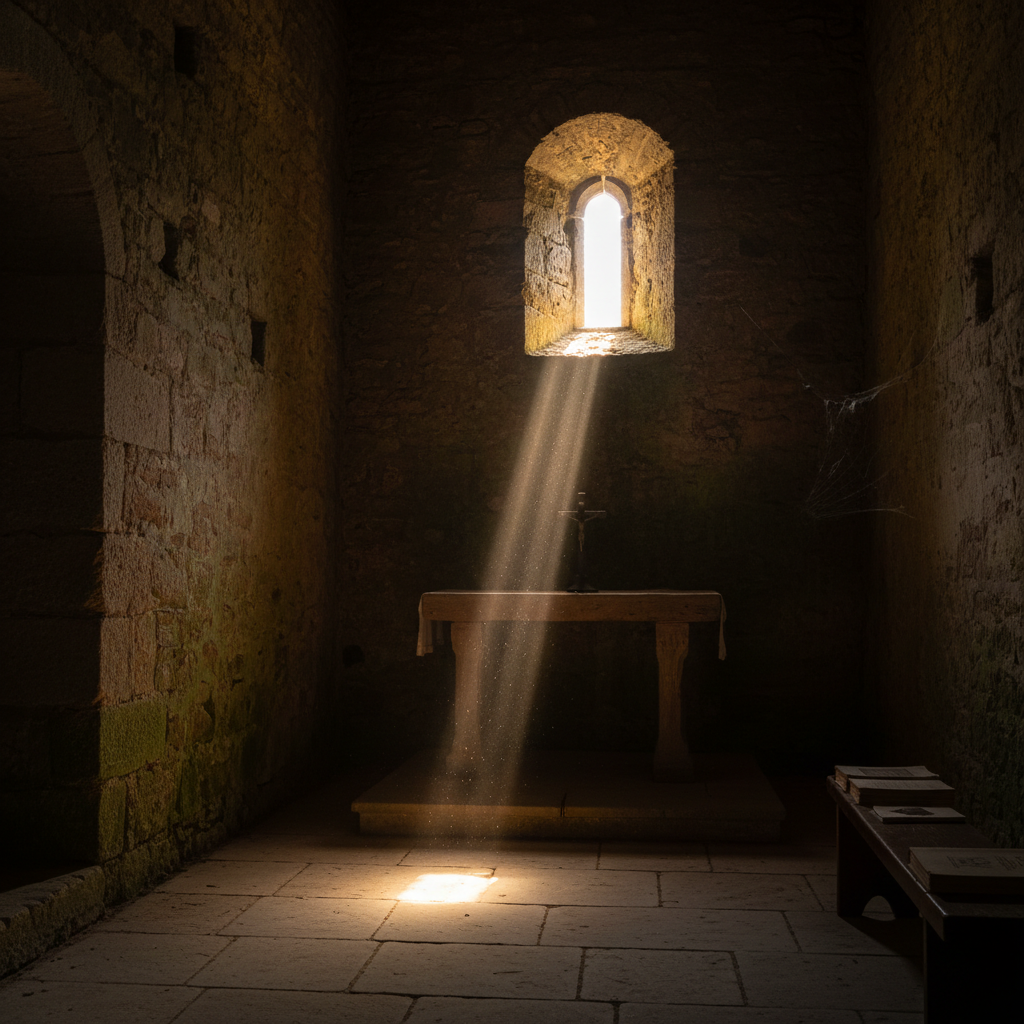
The cave above Assisi where Francis prayed is still known today. Pilgrims visit it as one of the earliest sites of his conversion.
The crucifix of San Damiano is now venerated in the Basilica of Santa Chiara in Assisi. It has been moved but never destroyed.
The Conversion
Repair My House
The turning point came in the dilapidated chapel of San Damiano, just outside Assisi's walls. Kneeling before a Byzantine-style painted crucifix, Francis heard the image of Christ speak to him: "Francis, go and repair my house which, as you see, is falling into ruin." He interpreted this literally at first, selling bolts of his father's cloth to pay a priest for restoration materials.
The Founding
Go Forth, Two by Two
For two years, Francis lived alone in radical poverty — begging his food, repairing chapels stone by stone with his own hands, caring for lepers in the plain below Assisi. Then, on the feast of Saint Matthias, 1208, he heard the Gospel passage at Mass in which Christ sends out his disciples with nothing — no staff, no purse, no second cloak. He leapt to his feet: "This is what I want. This is what I seek. This is what I desire with all my heart."
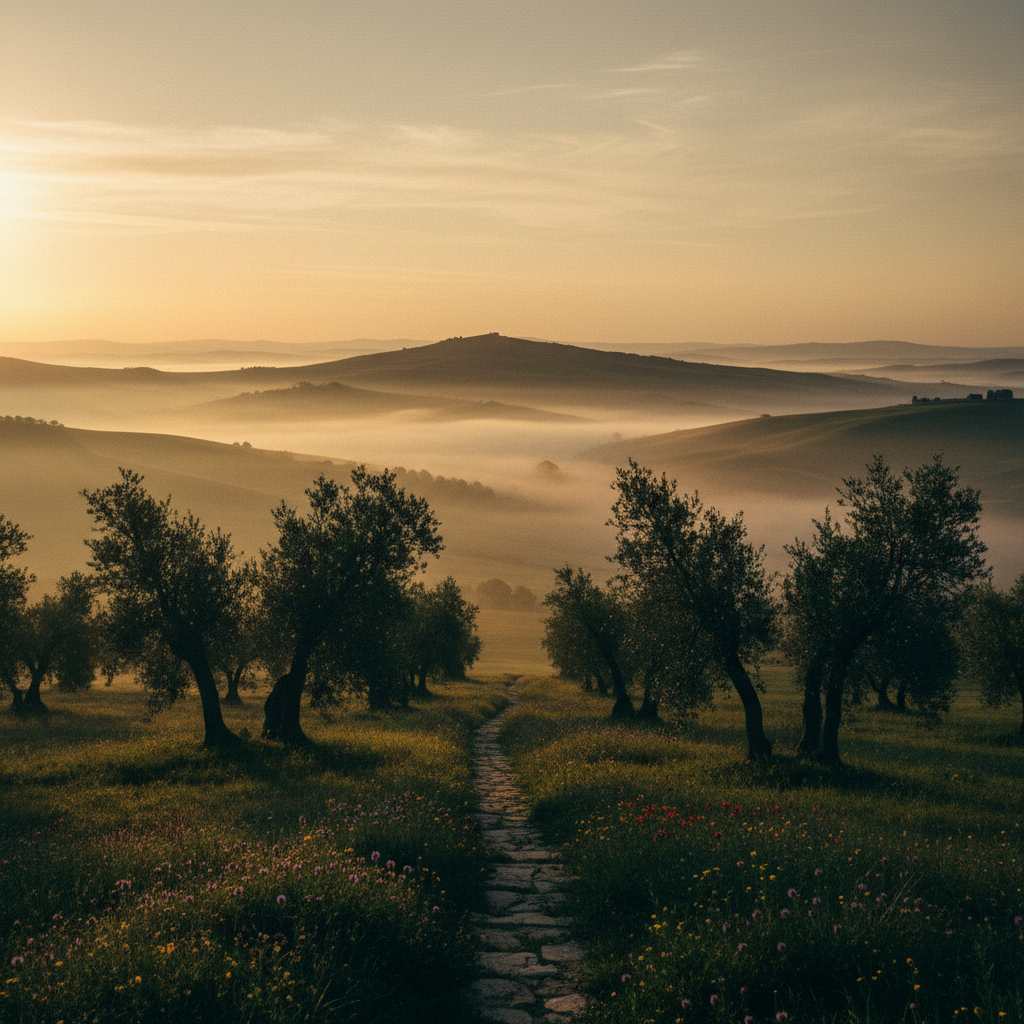
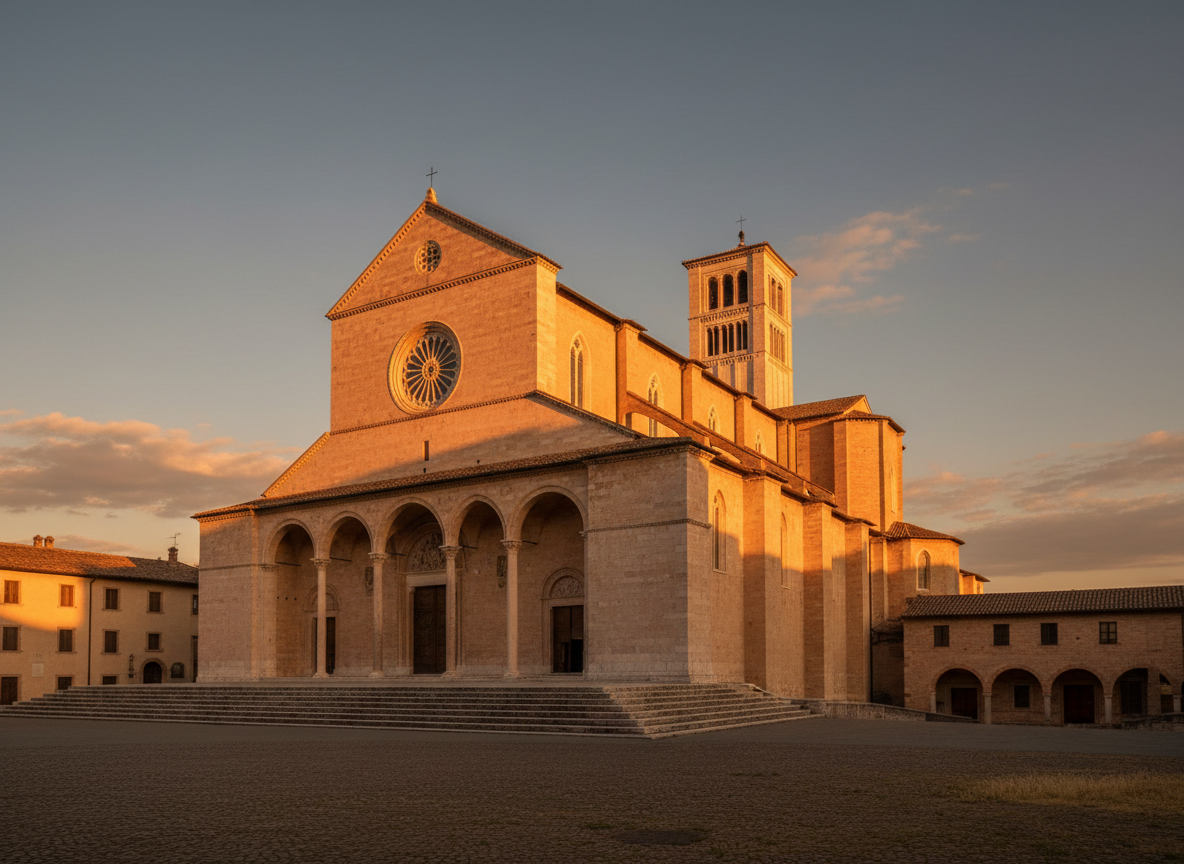
The Porziuncola — the tiny chapel Francis restored — still stands today, enclosed inside the grand Basilica of Santa Maria degli Angeli near Assisi.
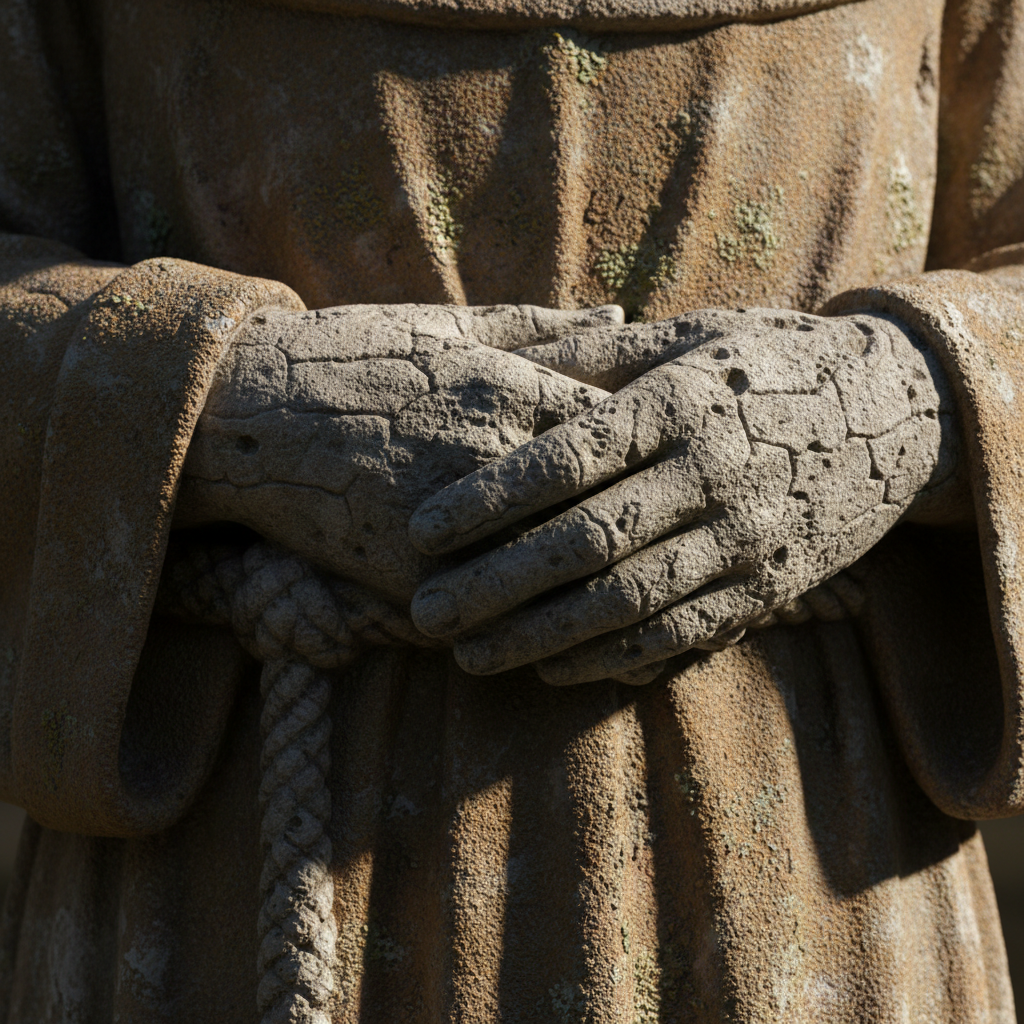
The cell at San Damiano where Francis composed the Canticle can still be visited by pilgrims today.
The Stigmata & Death
Marked by the Wounds of Love
In September 1224, Francis withdrew to Mount La Verna in the Tuscan Apennines for a forty-day fast in preparation for Michaelmas. On the Feast of the Exaltation of the Holy Cross, in a vision of a seraph in the form of a crucified man, he received the five wounds of Christ — the stigmata — in his hands, feet, and right side. He became the first person in recorded history to receive this phenomenon.
A Life in Years
Chronicle of a
Holy Journey
swipe →
His Lasting Legacy
The Founding of
the Franciscan Family
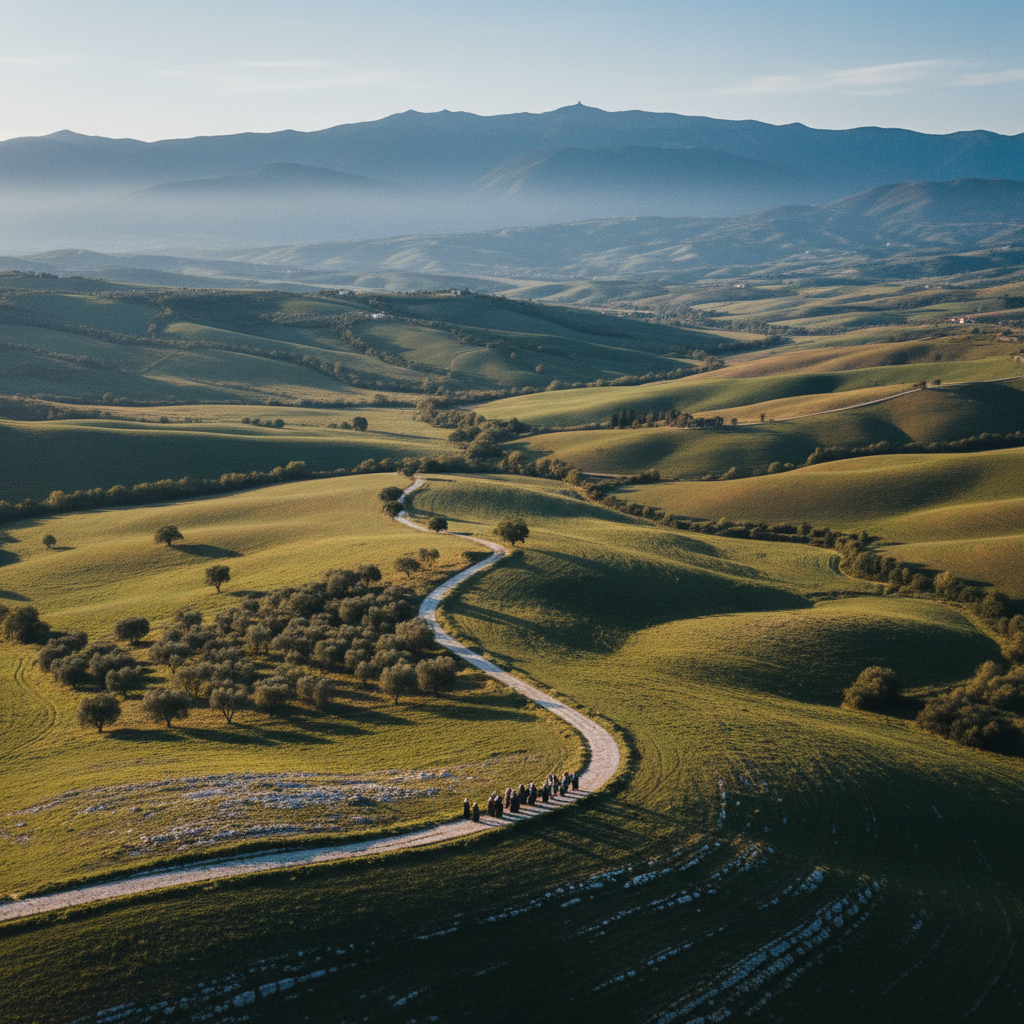
What began with twelve poor men walking barefoot through Umbria became one of the largest spiritual movements in Christian history.
First Order · Founded 1209
The Order of Friars Minor
The original brotherhood of men vowed to radical poverty, fraternal charity, and itinerant preaching. Known as the Franciscans, OFM, Conventuals, and Capuchins.
Second Order · Founded 1212
The Poor Ladies
Founded with Saint Clare of Assisi. Cloistered women living in complete poverty and contemplative prayer. Now known as the Poor Clares.
Third Order · Founded c. 1221
The Third Order
The Order of Penance — for lay men and women living in the world. Millions across the centuries have followed the Franciscan spirit without taking vows.
By the Numbers
Explore Further
Deepen Your Understanding
Recommended Reading
From Francis's own pen to the great Franciscan mystics, from medieval chroniclers to modern scholars — a curated library for the pilgrim seeking to go deeper.
The Writings of Saint Francis of Assisi
Saint Francis of Assisi · c. 1205–1226
The complete authentic writings — the Canticle of the Sun, letters, admonitions, prayers, and the Rule of the Lesser Brothers — in Francis's own words.
Find in library →
The Little Flowers of Saint Francis
Anonymous (Fioretti) · c. 1390
A beloved collection of legends and anecdotes from the early Franciscan brotherhood, capturing the spirit and joy of Francis and his first companions.
Find in library →
The Living Community
Pilgrim Reflections
Voices from those who have walked in his footsteps — stories of grace, conversion, and the joy of the lesser way.
Add Your Voice
Be the first to offer a reflection.
Your words may kindle a flame in another pilgrim's heart.
3,410 souls have visited this sanctuary